How Heat Pumps Work: The Easy Guide Homeowners Need
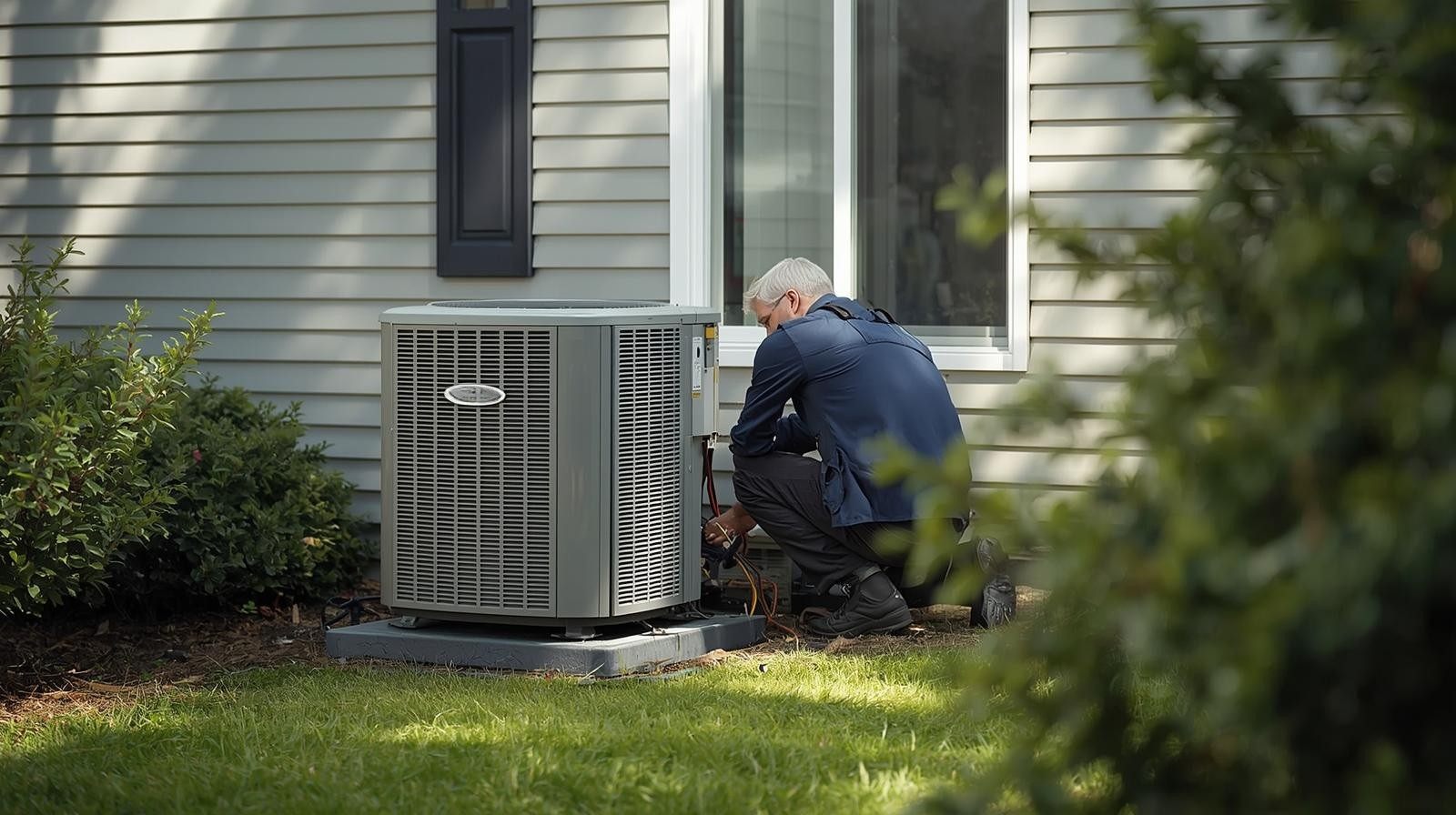
A heat pump heats and cools your home by moving heat from one place to another, and that simple idea answers the question, how does a heat pump work. If the whole thing has ever sounded backwards, especially on a cold January morning when the outdoor unit is still running, this will clear it up fast.
What a heat pump does, in plain english
A heat pump does not create heat the way a furnace does. It takes heat that already exists in the air and moves it. In winter, it pulls heat from outside and brings it into your home. In summer, it does the opposite and sends indoor heat outside.
That sounds strange at first, mostly because “cold outside” feels like “no heat outside.” But cold air is not empty air. There is still heat energy in it, and a heat pump is built to capture that energy and concentrate it where you want it.
The easiest analogy is your refrigerator, just flipped around. A fridge pulls heat out of the food compartment and dumps that heat into your kitchen through the coils on the back or underneath. A heat pump uses the same basic idea, just for your whole house. It is a heat mover, not a heat maker.
That distinction matters because moving heat usually takes less energy than generating it from scratch. That is why heat pumps have become such a big deal for homeowners looking at comfort, energy bills, and replacing aging HVAC equipment.
Why a heat pump feels different from a furnace or boiler
A furnace burns fuel or uses electric resistance to make heat. A boiler heats water and sends that heat through radiators, baseboards, or in-floor tubing. A heat pump transfers heat from one place to another.
In day-to-day life, that difference shows up in how the heat feels. A gas furnace often sends out very hot air in short bursts. You hear it kick on, the vents blast warm air, the house reaches the thermostat setting, and the system shuts off. A heat pump usually runs longer and delivers gentler warm air. The air from the vents may not feel hot-hot against your hand, but your home can still stay perfectly comfortable.
Here’s the thing: a lot of first-time heat pump owners assume something is wrong because the air feels milder than furnace air. Usually, nothing is wrong at all. The system is just maintaining temperature more steadily instead of overshooting it and shutting down.
If you have used boiler heat before, the contrast can feel different in another way. Boilers tend to create a very even, quiet warmth. Heat pumps can also feel steady, but they do it by moving conditioned air or by feeding indoor heads in a ductless setup.
The main parts of a heat pump
Most homeowners hear a handful of terms during an estimate or service visit: outdoor unit, indoor unit, refrigerant, compressor, reversing valve, thermostat. Once those make sense, the whole system gets a lot less mysterious.
Outdoor unit
The outdoor unit is the box outside your home. It contains a coil, a fan, and usually the compressor. In cooling mode, this is where heat from inside your home gets released to the outdoors. In heating mode, this is where the system collects heat from the outdoor air.
That is why the outdoor unit still matters in winter. It is not just sitting there waiting for summer. It is actively part of the heating process.
The fan pulls outdoor air across the coil. The refrigerant inside that coil absorbs or releases heat depending on which mode the system is in. Then the compressor helps move that heat along the loop.
Indoor unit
The indoor side depends on the kind of heat pump you have. In a ducted system, you may have an air handler, which is the indoor equipment that moves air through your ductwork. In some homes, the heat pump pairs with a furnace cabinet, especially in dual-fuel systems.
Inside, another coil transfers heat to or from the air moving through your home. In heating mode, indoor air passes over a warm coil and picks up heat before going through the vents. In cooling mode, indoor air passes over a cold coil, loses heat, and goes back into your rooms cooler and drier.
If you have a ductless mini-split, the indoor unit is the wall-mounted, floor-mounted, or ceiling-mounted head in the room. Same principle, different delivery method.
Refrigerant and the refrigerant loop
Refrigerant is the fluid that carries heat through the system. Think of it like a shuttle for heat. It circulates through a closed loop between the outdoor and indoor equipment, picking up heat in one place and dropping it off in another.
The useful trick is that refrigerant can absorb and release heat as it changes pressure and temperature. You do not need to memorize the chemistry. The simple version is enough: refrigerant is the stuff inside the system that moves heat around.
Because it runs in a sealed loop, refrigerant should not get “used up” like gas in a car. If levels are low, that usually points to a leak and needs service.
Reversing valve
The reversing valve is the part that lets a heat pump switch between heating and cooling. It changes the direction the refrigerant flows through the system.
That small change is what makes the whole system so versatile. Without it, you would basically have straight air conditioning. With it, the same equipment can cool your home in July and heat it in January.
Thermostat and controls
Your thermostat tells the heat pump when to run, what temperature to aim for, and in some systems, when to bring on backup heat. Modern controls can also manage fan speed, staging, humidity, and scheduling.
Smart settings matter more than a lot of homeowners realize. Heat pumps often work best when you keep temperatures fairly steady instead of making big thermostat swings. Dropping the temperature way down overnight and asking the system to recover quickly in the morning can trigger auxiliary heat, which is usually more expensive to run.
How a heat pump works in winter
In winter, the heat pump pulls heat from outdoor air and moves it indoors. That is the headline version. The step-by-step version is not much harder.
Outdoor air passes over the outdoor coil. The refrigerant inside that coil is cold enough to absorb heat from the air, even when the air outside feels cold to you. The refrigerant then travels to the compressor, where its pressure increases. When pressure goes up, temperature goes up too. Now that refrigerant is carrying concentrated heat.
Next, the hot refrigerant moves to the indoor coil. Indoor air blows across that coil, picks up the heat, and circulates through your home. As the refrigerant gives up heat, it cools down and cycles back outside to repeat the process.
That loop keeps going until your thermostat says the indoor temperature is where you want it.
Yes, it can pull heat from cold air
This is the part that trips people up. If it is 35 degrees outside, or even lower, how can a heat pump find heat?
Because “cold” is relative. Outdoor air still contains thermal energy well below room temperature. A heat pump does not need outdoor air to feel warm. It just needs there to be enough heat energy for the refrigerant to absorb. The system is designed so the refrigerant in the outdoor coil is cold enough to draw heat from that air.
A simple way to picture it is squeezing the last bit of toothpaste out of the tube. There is still something in there, even when it seems like there should not be much left. Cold outdoor air still has usable heat energy in it, and the heat pump is built to grab it.
Modern cold-climate models do this far better than older systems. That is a big reason heat pumps are showing up in places where many homeowners used to assume they could never work.
What the compressor actually does
The compressor is the muscle of the system. It pressurizes the refrigerant and raises its temperature so the heat can be released indoors.
Without the compressor, the refrigerant would not be able to carry low-grade outdoor heat and turn it into useful indoor warmth. That pressure change is the trick that makes the whole process practical.
If you hear an HVAC tech talk about the compressor as a major component, that is why. It does not create heat by itself, but it makes heat transfer possible at the temperature your home needs.
How a heat pump works in summer
In summer, a heat pump works like a standard air conditioner. It pulls heat from inside your home and releases it outside.
Warm indoor air moves across the indoor coil. The refrigerant absorbs that indoor heat, then carries it outside. The outdoor unit releases the heat into the outdoor air, and cooler air gets sent back through your home.
At the same time, the system removes some humidity from the indoor air. That is why your home feels not just cooler, but less sticky too.
For most homeowners, this mode feels familiar because it is familiar. If you have ever had central AC, the summer operation of a heat pump is not some strange new technology. It is basically the same cooling job.
Why cooling mode feels familiar
Cooling mode feels familiar because the heat pump is doing what an air conditioner already does: moving heat out of your house.
That makes heat pumps easier to understand than the name suggests. The word “heat” makes it sound like a heating-only machine, but half the story is regular air conditioning. The same equipment just has the ability to reverse direction when the weather changes.
What “reversing the cycle” really means
Reversing the cycle means the system swaps the direction of heat flow. In summer, heat moves from inside to outside. In winter, heat moves from outside to inside.
The hardware is mostly the same in both seasons. The compressor still compresses refrigerant. The coils still exchange heat. The fan still moves air. What changes is which coil acts as the heat absorber and which one acts as the heat releaser. The reversing valve makes that swap happen.
That is why a heat pump can replace both an air conditioner and, in many homes, a separate heating system. Instead of owning one machine for cooling and another for heating, you get one system that changes jobs.
How heat pumps save energy
Heat pumps save energy because moving heat usually takes less electricity than creating heat from scratch. This is the whole reason heat pumps can cut energy use.
A resistance electric heater works a lot like a toaster. Electricity flows through a heating element, and that element gets hot. It works, but it is not especially efficient compared with heat transfer. A heat pump uses electricity to run fans, controls, and the compressor, then moves existing heat instead of generating all of it directly.
That is how a heat pump can deliver more heat energy to your home than the electrical energy it consumes. It sounds impossible until you remember that the system is transporting heat, not inventing it.
Savings depend on climate, equipment quality, insulation, duct condition, and thermostat habits. But the core idea stays the same. If your home can get heat by transfer instead of by burning fuel or using electric resistance alone, the math often works in your favor.
Why efficiency ratings matter
Efficiency ratings help you compare models without digging through engineering details.
SEER, or Seasonal Energy Efficiency Ratio, tells you about cooling efficiency over a season. The higher the number, the less electricity the unit generally needs for the same cooling output.
HSPF, or Heating Seasonal Performance Factor, does a similar job for heating season performance. Again, higher usually means more efficient heating.
COP stands for coefficient of performance. This one sounds technical, but the concept is simple. It compares how much heat the system delivers to how much energy it uses. A COP of 3 means the system delivers about three units of heat for every one unit of electricity used under those conditions.
You do not need to obsess over every rating. But if you are comparing quotes, those numbers tell you whether one system is likely to cost more or less to run.
What “up to 4x efficient” actually means
When you hear that a heat pump can be “up to 4x efficient,” it means the system can deliver roughly four units of heat for every one unit of electricity it consumes under favorable conditions.
The catch is that “up to” matters. Performance changes with outdoor temperature, system design, defrost cycles, and how the equipment is installed. You will not get the same result every hour of every winter day.
Still, the claim points to something real. A heat pump can move several times more heat energy than the electric energy it uses, because it is relocating heat instead of making all of it from scratch.
Types of heat pumps You’ll hear about
Not every heat pump looks the same, and not every quote applies to every home. A few categories come up over and over.
Air-source heat pumps
Air-source heat pumps are the most common type in homes. This is usually what you mean when you ask how does a heat pump work.
These systems transfer heat between your home and the outdoor air. They can be ducted, using your existing ductwork, or configured in other ways depending on the house. For most homeowners replacing central heating and cooling equipment, this is the starting point.
They are popular because they are familiar, widely available, and often easier to install than ground-source systems.
Ductless mini-split heat pumps
Ductless mini-splits use the same heat-transfer principle but skip the ductwork. Outdoor equipment connects to one or more indoor heads mounted in specific rooms or zones.
This setup is common in older homes without ducts, finished attics, garage conversions, additions, and homes where one room is always too hot or too cold. The big draw is control. You can condition the rooms you actually use instead of pushing air through the whole house all the time.
A white wall-mounted head in a back bedroom may not be everybody’s dream look, but the comfort payoff is real.
Ground-source heat pumps
Ground-source heat pumps, often called geothermal systems, move heat to and from the ground instead of the outdoor air. A few feet below the surface, ground temperatures stay more stable than outdoor air temperatures.
That stability can improve efficiency, especially in places with very hot summers or very cold winters. The downside is cost and installation complexity. Ground loops require trenching or drilling, so these systems are usually a bigger project.
Still, the principle is the same. Move heat, do not create it if you can avoid it.
Do heat pumps work in cold weather?
Yes, heat pumps work in cold weather, and modern cold-climate systems work much better than many homeowners expect. But local weather still matters.
As outdoor temperatures fall, it gets harder for the system to pull enough heat from the air, so heating capacity can drop. That does not mean the heat pump quits. It means the job gets tougher. In mild to moderately cold climates, a properly sized heat pump may handle nearly all winter heating on its own. In colder climates, the system may rely on backup heat during the coldest stretches.
This is why installation and sizing matter so much. A heat pump that is perfect for Raleigh may not be the right choice for northern Minnesota without a backup strategy.
What happens during freezing weather
During freezing weather, the heat pump still runs, often for longer cycles. Longer run time is not automatically bad. In fact, steady operation is part of how heat pumps maintain even comfort.
As it gets colder outside, you may notice the indoor air feels less toasty than furnace air. Again, that does not mean the system is failing. If your home reaches and holds the thermostat setting, the system is doing its job.
The real issue is not whether the outdoor number dips below 32. It is how your specific system performs across the temperature range common in your area.
Defrost mode explained
In heating mode, the outdoor coil can get cold enough for frost to form on it. When that happens, the system periodically enters defrost mode to clear the buildup.
During defrost, the heat pump temporarily switches operation to warm the outdoor coil and melt the frost. You might see steam rising from the outdoor unit. You might hear a change in sound. You might feel cooler air for a short time indoors unless backup heat comes on.
That can look alarming the first time you notice it, especially on a frosty morning. Usually, it is completely normal.
When auxiliary or backup heat turns on
Auxiliary heat is backup heat that helps the heat pump when outdoor conditions are very cold or when the thermostat is asking for a quick temperature increase.
In some systems, that backup is electric heat strips inside the air handler. In others, especially dual-fuel systems, a furnace takes over or assists. Backup heat is useful, but electric strip heat can be expensive to run, so you generally do not want it kicking on all the time.
If auxiliary heat seems to run constantly, or your bills suddenly jump, that is worth having checked.
The pros homeowners usually notice first
The first thing many homeowners notice is convenience. One system handles heating and cooling.
The second thing is comfort. Heat pumps are good at maintaining a more even indoor temperature, with fewer dramatic hot-and-cold swings. Instead of a big blast followed by a cooldown, you get a steadier feel.
Lower energy use is another major upside, especially if you are replacing electric resistance heat or older, less efficient equipment. Depending on the setup, you may also notice better humidity control in summer, which can make 75 degrees feel a lot more comfortable than a sticky 75.
And honestly, fewer separate systems to think about is appealing by itself. One coordinated setup is simpler than juggling an aging AC and a separate heater on borrowed time.
The trade-offs to know before you buy
Heat pumps are not magic, and this is where honest expectations matter.
The upfront cost can be higher than a basic replacement furnace or AC, especially if your home needs electrical upgrades, duct modifications, or a cold-climate model. If your panel is already crowded, that part of the quote can sting.
The heating feel can also take some adjustment. If you love the blast of very hot furnace air, a heat pump may feel gentler than expected. Comfortable, yes. Dramatic, no.
Installation quality matters a lot. A poorly sized or poorly installed heat pump can underperform, short cycle, struggle with humidity, or lean too heavily on backup heat. In other words, the box matters, but the design matters just as much.
Signs a heat pump is working normally, and signs it needs service
A heat pump can behave in ways that surprise first-time owners, especially in winter. Knowing what is normal helps you avoid unnecessary worry. Knowing what is not normal helps you act before a small issue turns into a bigger repair.
Normal things that surprise first-time owners
Longer run times are normal. Heat pumps often run for extended periods to maintain steady comfort.
Gentler warm air is normal too. Vent air may feel warm, but not furnace-hot.
Defrost cycles are normal in cold, damp weather. So is water dripping outside as frost melts. Steam from the outdoor unit can also be normal during defrost, even if it looks dramatic from the driveway.
Outdoor fan behavior can change depending on mode and defrost operation. Sometimes the unit may sound different for a few minutes, then go back to normal. That alone is not a problem.
Red flags you Shouldn’t ignore
Weak airflow is a problem, especially if some rooms barely get conditioned air. Persistent ice that does not clear is another one. A little frost is expected sometimes. A unit entombed in ice is not.
Loud grinding, rattling, or harsh buzzing deserves attention. So does short cycling, when the system turns on and off repeatedly without running long enough to do its job.
Pay attention to comfort and cost. If rooms never reach the set temperature, or your energy bills climb sharply without a weather explanation, something may be off. Dirty filters, low refrigerant, airflow restrictions, sensor issues, or backup heat running too often can all be part of the story.
Is a heat pump right for your home?
A heat pump can be a very good fit if you want one system for both heating and cooling, especially if your current equipment is aging on both sides. It also makes a lot of sense in homes with decent insulation and air sealing, because the less heat your home loses, the easier the system’s job becomes.
Ductwork matters. If your existing ducts are in good shape, a ducted heat pump may be a straightforward option. If your home has no ducts, or only certain rooms need help, ductless mini-splits may make more sense.
Climate matters too, but not in the old yes-or-no way. The real question is how cold it gets where you live, how often it gets that cold, and what backup heat strategy fits your home.
If you are replacing both heating and cooling equipment anyway, a heat pump deserves a serious look. That is often the moment when the numbers and comfort benefits line up best.
Common questions about how heat pumps work
Does a heat pump use a lot of electricity?
A heat pump uses electricity, but using electricity is not the same as using it inefficiently. Because it moves heat instead of making all of it directly, it can deliver more heating or cooling for the energy used than many people expect.
Can a heat pump replace a furnace?
Yes, in many homes it can. In colder areas, it may pair with a furnace in a dual-fuel setup, where the heat pump handles milder weather and the furnace steps in during colder conditions.
Is a heat pump just an air conditioner?
Not quite. It cools like an air conditioner in summer, but it can also reverse the cycle and heat your home in winter.
How long does a heat pump last?
A typical heat pump lasts about 10 to 15 years, sometimes longer with good maintenance and solid installation. Filter changes, coil cleanliness, refrigerant health, and correct sizing all affect lifespan.
What should you try next?
Check the age of your current heating and cooling equipment, then look at how your home actually feels. If certain rooms never stay comfortable, your winter bills keep climbing, or both your AC and heater are getting old at the same time, that is a strong reason to schedule a home-specific HVAC evaluation. One good visit can tell you a lot more than another hour of guessing at the thermostat.
Disclaimer: This article is for general informational purposes only. It is not professional advice, a quote, or a service agreement. Conditions at your home or property may differ; contact a qualified professional for an on-site evaluation before making repair, safety, or spending decisions.
Ready to talk through this?
Send notes and photos when you contact us. We will explain what we can confirm and what comes next.