An Air Duct Cleaning Quote and an Air Duct Repair Quote Answer Different Questions
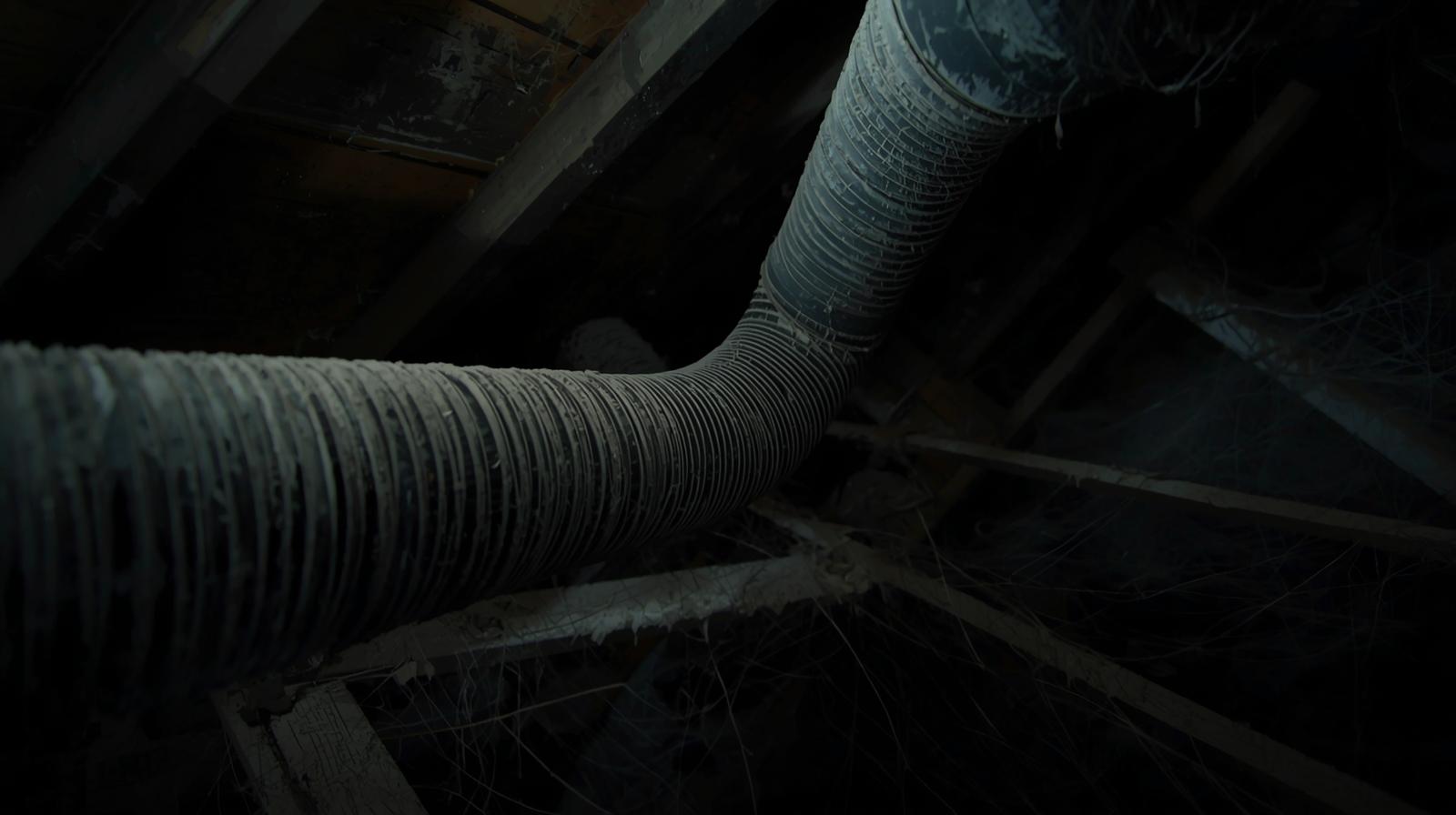
Homeowners often use "ductwork problem" to describe several unrelated conditions. Dust may be visible around a register. One room may receive very little airflow. A return may whistle. The house may smell stale when the air conditioner begins running. Another homeowner may know that flexible ductwork has been damaged or disconnected in the attic.
Those symptoms do not automatically lead to the same service.
We keep air-duct cleaning and air-duct repair as separate services within our indoor-air-quality division. We also offer broader air-quality assessments and dehumidifier work when the concern extends beyond the duct material itself.
The first visit should identify which question the homeowner is actually asking.
Cleaning addresses material inside the duct system
A duct-cleaning discussion begins with something present inside the accessible system. That may include accumulated dust, debris, or another documented material that the homeowner wants evaluated and removed.
A proper conversation should answer what was found, where it was found, how extensive it is, whether the material is inside the duct or around the register, whether there is an underlying moisture or filtration problem, what parts of the system can be accessed, and what the cleaning process will include.
The presence of dust on a return grille does not by itself prove the entire duct system needs cleaning. Grilles collect material because air moves across them. Filters, household activity, pet hair, renovations, and gaps around boots can all affect what appears at the register.
Our inspection should connect the proposed cleaning to actual findings.
Repair addresses the physical air path
Duct repair begins with the condition or layout of the ductwork. The technician may be looking for loose or disconnected sections, crushed flexible duct, damaged insulation, leaks at joints or boots, poorly supported runs, restricted bends, deteriorated sections, and airflow lost before it reaches the room.
These issues are especially relevant in homes where ducts travel through hot attic spaces. Our current educational content notes that leaking, damaged, or restricted attic duct paths can affect room comfort and return-air behavior during long cooling runs.
Cleaning a disconnected duct does not reconnect it. Repairing a leak does not automatically remove buildup elsewhere. The findings determine which service belongs in the proposal. Cooling performance questions can continue under cooling service when the equipment itself is part of the story.
One hot room can be a layout problem
A bedroom that stays warm does not automatically mean its duct is dirty.
The room may receive too little supply air. The return path may be limited when the door is closed. The duct may be too long, damaged, or poorly balanced. The room itself may have greater sun exposure than the rest of the house.
Before requesting duct cleaning for one hot room, note whether airflow feels weak at the register, whether the problem changes when the door is open, the time of day the room becomes uncomfortable, whether the room was added later, how far it is from the air handler, and whether another nearby room has the same issue.
These details can direct the inspection toward airflow and layout instead of buildup. Homes in Crystal River and the rest of Citrus County often show these patterns during long afternoon cooling runs.
A musty odor can involve ducts without being solved by cleaning alone
Odor is another symptom that can be oversimplified. The source may involve a drain, coil, air handler, wet insulation, high indoor humidity, material inside ductwork, or another moisture condition.
We offer dehumidifier service and indoor-air-quality assessments alongside duct cleaning and repair.
That broader service mix matters because a homeowner should not pay to clean ducts while the condition producing moisture remains unchanged.
When describing the odor, note when it begins, how long it lasts, which registers seem strongest, whether it follows rain or a long shutdown, whether the home feels damp, whether visible water has appeared near the air handler, and whether the odor changes after a filter replacement.
The pattern can help us decide which part of the system deserves the first inspection.
Renovations create their own duct questions
Construction dust can enter living spaces and accessible parts of an HVAC system, especially when equipment runs during remodeling. The renovation can also create physical duct problems.
Workers may move flexible runs, damage insulation, block a return, or add a room without properly redesigning the airflow. After a renovation, homeowners should not assume the only question is cleaning.
A useful post-project inspection may need to consider construction debris, filter loading, register and return locations, new room airflow, damaged attic ductwork, changed door patterns, equipment capacity, and moisture in newly enclosed spaces.
The correct service may be cleaning, repair, balancing, another filter strategy, or a combination.
Ask for findings separated by category
A clear proposal should not use "duct service" as one vague line item.
Ask us to explain the findings in plain categories. Cleaning: what material should be removed? Repair: what part is damaged, leaking, crushed, or disconnected? Airflow: which rooms or returns are not moving air as expected? Moisture: is humidity or condensation contributing to the concern? Equipment: is the blower or cooling system affecting the result?
That structure gives the homeowner a better way to approve the work that addresses the documented problem.
We have served Citrus County since 1990 and can be reached at (352) 621-3444 or through the contact page. License CAC1818450. Related reading on the blog includes why we recommend two HVAC service visits a year in Citrus County.
Not Sure Whether You Need Cleaning or Repair?
Describe the rooms, odors, renovation history, and what you see at the registers. We will inspect and separate cleaning findings from repair findings.